GREATER GEORGIA ANNOUNCES SIX-FIGURE CAMPAIGN TO EXPOSE FAILURES OF FULTON COUNTY DISTRICT ATTORNEY FANI WILLIS

September 5, 2024

ATLANTA – Today, Greater Georgia announced a six-figure campaign to expose the costly failures of District Attorney Fani Willis that continue to impact Fulton County residents. The campaign includes digital ads and text messages, reaching Atlanta-area voters ahead of the Fulton County District Attorney election on November 5th. The awareness effort launched today with a video ad entitled “Failed,” which is running on streaming and programmatic media including Fox News, CNN, WSB TV, Hulu, Roku, and Fubo. Click HERE or on the image below to watch the ad.


“Fani Willis had one job when voters put their trust in her in 2020: prosecute violent career criminals in order to protect the residents of Fulton County. Instead, she’s spent the last four years chasing vanity cases to grow her celebrity, line her pockets, and fuel her political ambitions,” said Greater Georgia Chairwoman and Former U.S. Senator Kelly Loeffler. “On her watch, prosecutions are down, crime is up, and more citizens have been needlessly victimized – then denied justice because she is too distracted or too incompetent to deliver it. Willis’ conduct is an embarrassment to the state of Georgia and a profound threat to public safety. She must be ousted this November to restore law and order in Fulton County – and end the era of partisan, personal, taxpayer-funded distractions.”
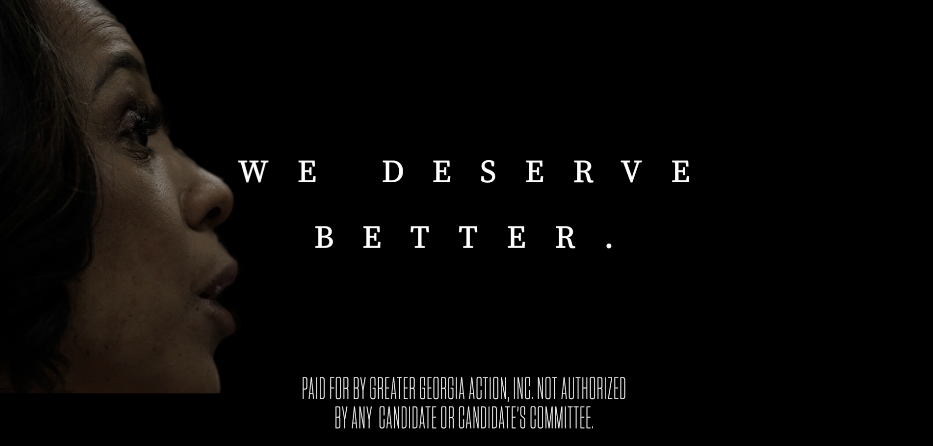


The Greater Georgia campaign will highlight three significant categories of failures of Willis’ tenure as D.A. including:


Presiding over rising crime rates, failure to prosecute criminals, and dozens of inmate deaths.


  • Homicides increased by 8% in Fulton County from 2021 to 2022. Since 2023, homicides have increased by 13% in the City of Atlanta. (Georgia Bureau of Investigation Uniform Crime Reporting Program, accessed August 29, 2024; Atlanta Journal-Constitution, July 16, 2024)


  • 13,787 people were arrested for felonies in 2023 but never indicted. At the end of 2023, the Fulton County D.A. still had a backlog of 11,700 unindicted cases. (Atlanta News First, June 12, 2024; Atlanta News First, October 30, 2023)


  • 36% of the Fulton County Jail population, or over 900 inmates, are being held without indictment as of the latest publicly available data. (Fulton County Government Project ORCA, January 24, 2024)


  • About 30 inmates have died in the Fulton County Jail since 2021 – some of whom died waiting for indictments from the D.A.’s office. (Atlanta Journal-Constitution, December 7, 2023)


  • Of the felons that have been indicted, many have gone on to commit more crimes while awaiting trial. (Atlanta News First, June 12, 2024)


Wasting taxpayer funds and profiting off prosecutions.


  • In 2021, Fani Willis was accused of misappropriating $488,000 in grant funds from the U.S. Department of Justice and was later subpoenaed over the allegations by the U.S. House Judiciary Committee. (United States House of Representatives, February 2, 2024)


  • Separately, members of the U.S. Senate launched an investigation into Fani Willis, this time related to accusations that she misused $2,000,000 in U.S Department of Justice funds earmarked for clearing sexual assault cases. (United States Senate, May 15, 2024)


  • Fani Willis also hired her love interest, Nathan Wade, as the lead special prosecutor in the Donald Trump election interference case. From 2021 to 2023, she paid Wade $654,000 – more than any other special prosecutor on the case, even though he had never prosecuted a felony before. (11 Alive News, January 16, 2024)


  • It was later revealed that Wade and Willis used those profits to take lavish vacations together during the Trump proceedings, including to Napa Valley, Miami, and on a Royal Caribbean Cruise. (New York Post, January 19, 2024)


Pursuing personal ambition over public safety to advance her political career and celebrity.


  • Fani Willis is a proud Democrat. In 2022, she was even admonished by a judge for raising money to defeat a Republican political candidate she was simultaneously seeking to indict. (CNN, July 21, 2022)


  • Accordingly, during the early stages of her case against President Trump, her office requested help from the January 6 Committee and held meetings with the White House. (Politico, January 10, 2024; Fox News, January 9, 2024)


  • Even after her affair and personal profiteering scheme were uncovered in the case, and numerous motions were filed for her removal, she vowed: “nothing…will derail the efforts of my staff and I to bring the election interference prosecution to trial” to convict President Trump. (ABC News, March 27, 2024)


  • In March 2024, a judge ordered either Fani Willis or Nathan Wade to resign from the Trump case. Wade stepped aside – but the court still condemned Willis for “a significant appearance of impropriety” and a lingering “odor of mendacity.” (Wall Street Journal, March 15, 2024)


  • Meanwhile, her other major case against Young Thug and YSL - which has been described as a “legacy building case” - has now dragged on for over two years. It is the longest-running criminal trial in Georgia history. (NBC News, August 12, 2024)


  • Like the Trump case, the YSL case has diverted tremendous time and resources from the public safety responsibilities of Fani Willis’ office – due largely to her bungled prosecution. Most recently, her office held a secret and illegal ex parte meeting with the trial judge, who was then forced to step down from the case. (Atlanta Journal-Constitution, July 20, 2024)


Greater Georgia, launched by former U.S. Senator Kelly Loeffler in 2021, is a 501(c4) nonpartisan nonprofit dedicated to growing participation in the democratic process by mobilizing and empowering voters. The group works year-round to educate and register voters, engage with diverse and underrepresented communities, and protect election integrity.


###


Media Contact: press@greatergeorgia.com

January 13, 2026
January 13, 2026 An Open Letter To the Georgia State Senate and House of Representatives: Georgia stands at a crossroads. Under state law, and thanks to the leadership of both chambers, QR codes must be removed from our ballots by July 1, 2026. The 2026 legislative session is the last realistic opportunity to address this issue clearly and decisively. This session must produce a clear, funded, and fully operational solution with enforceable milestones by the November 2026 general elections, or Georgia risks failing both ballot security and voter confidence on an issue that now enjoys growing bipartisan concern. QR Codes: Not Just a Technicality Voting systems that rely on ballot-marking devices (BMDs) and automatically generate machine-readable QR or barcodes raise a fundamental transparency concern. Under current statewide practice, tabulation relies on machine-readable codes that voters cannot independently verify, even though human-readable text is printed for review. Critics argue that this two-layer design undermines the principle of a fully voter-verifiable ballot. Security researchers and computer scientists have documented plausible attack vectors in such systems — through malicious software, elevated access modes on touchscreen machines, or discrepancies between what is printed and what is ultimately scanned — and their reports and legal testimony underscore the importance of systems voters can directly verify. For that reason, Georgia must transition to fully human-verifiable ballots, supported by strong audits and a robust paper trail, while preserving accessible voting options for voters who need assistance. An Unfunded Mandate Is Not a Plan In the 2025 Legislative Session, Senate Bill 189 established a mandate to eliminate QR-code ballots by July 1, 2026. However, no funding was identified to carry out that mandate, creating the uncertainty Georgia now faces. As a result, voters across Georgia head toward the 2026 midterms with the same QR-code ballots and voting technology that has contributed to public distrust and recurring controversy. The General Assembly has the opportunity and the responsibility to address this in totality during the 2026 session, even if that requires giving election officials additional time to prepare for a new system to be in place by the general elections. No Half-Measures or Unfunded Mandates At Greater Georgia, we will advocate this session for three non-negotiables: 1. A Realistic Timeline and Full Funding Removing QR codes statewide will require financing new ballot-printing, tabulation equipment, testing, training, and implementation. While cost estimates vary, any plan passed in 2026 that lacks full funding, a procurement pathway, and a firm installation timeline invites confusion, risk, and failure. 2. Human-Readable Ballots and Transparency Ballots must be marked or printed in a way voters can read and verify before casting—and counted based on what voters can verify. Systems that rely on barcodes for tabulation place undue trust in machine interpretation and do not resolve the underlying transparency concern. 3. Proper Time for Election Officials to Prepare and Implement Election officials must be given sufficient time and resources to implement a new system competently, though that necessity cannot become a pretext for indefinite delay. Well-run elections are the foundation of trusted election processes. Georgia Must Choose: Action or Inaction As citizens, watchdogs, and advocates for secure and transparent elections, we cannot accept vague promises or unfunded mandates. The law requires the removal of QR codes. Georgia’s voters deserve clarity, accountability, and certainty. If the deadline must move, it should do so only with full funding, a procurement plan, and enforceable milestones before the midterm elections in 2026. We are grateful for the General Assembly’s responsiveness and leadership on this issue and look forward to collaborating to find sensible solutions that will make Georgia’s elections stronger in 2026 and beyond. No shortcuts. No unfunded mandates. Get it done, and get it done right, in the 2026 legislative session.
December 30, 2025
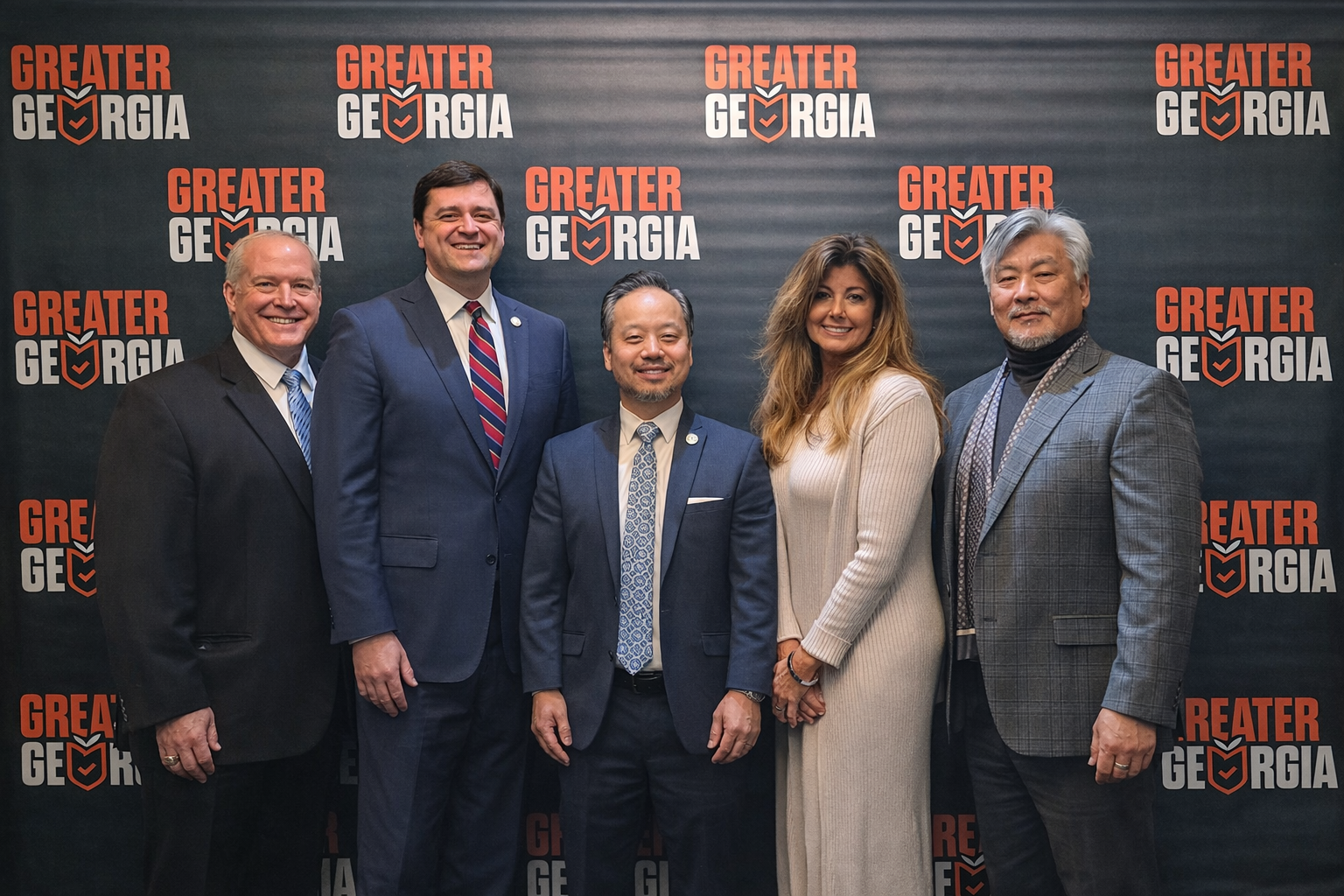
 Atlanta, GA — Greater Georgia concluded its Statewide Education Tour with a final stop hosted by the Metro Atlanta Chamber , convening business leaders, elected officials, and community stakeholders for a forward-looking discussion on Georgia’s priorities heading into the 2026 legislative session. Jon Burns , Speaker of the Georgia House of Representatives, offered a preview of key issues expected to shape the upcoming session. The discussion focused on policies central to Georgia’s long-term success, including property tax reform, access to mental health services, improving literacy outcomes, and ensuring students are prepared to enter the workforce. The Statewide Education Tour brought substantive policy conversations directly to communities across Georgia, reinforcing Greater Georgia’s commitment to informed dialogue and broad civic engagement. More than 250 business owners, community leaders, and local officials participated in tour stops across seven Georgia counties. Looking ahead to 2026, Greater Georgia will focus on training local leaders and activists and equipping them with the tools needed to host engaging, policy-oriented conversations in their own communities to strengthen civic leadership and engagement across the state. ###
October 17, 2025
Your Local Vote Matters:  Evaluating Candidates for Local Office
September 4, 2025
GREATER GEORGIA LAUNCHES STATEWIDE VOTER REGISTRATION PUSH IN ADVANCE OF 2026 MIDTERMS
By Carmen Bergman August 11, 2025
BUSINESS LEADERS JOIN LABOR COMMISSIONER BARBARA RIVERA HOLMES AND GREATER GEORGIA TO TACKLE WORKFORCE READINESS
July 15, 2025
ATLANTA, GA— Greater Georgia today released a statement in support of Georgia’s ongoing voter roll cleanup, calling the move a necessary and long overdue step to protect election integrity and restore confidence in the state’s electoral process. The Secretary of State’s office last week began the process of removing more than 500,000 outdated voter registrations, including those who have moved, passed away, or not voted in nearly a decade, as part of one of the largest list maintenance efforts in Georgia history. “This voter roll cleanup is not only common sense, it’s long overdue after fear-mongering lawsuits from leftist groups halted the process,” said Terry Fye of Greater Georgia. “Election officials, and especially the Secretary of State’s office, are legally required to keep our rolls accurate and failing to do so undermines trust in our elections and opens the door to potential fraud.” Georgia law requires regular voter roll maintenance to ensure only eligible voters remain on the rolls. The current process includes multiple attempts to contact inactive voters before any cancellation is finalized, offering ample time to update their information and maintain active status. Since its founding, Greater Georgia has worked to strengthen trust in elections by advocating for secure, transparent, and accountable voting practices. The organization has registered more than 65,000 new voters, expanded civic engagement in every corner of the state, and continues to push for meaningful reforms that protect the vote of every legal Georgian. ### Greater Georgia, founded by former U.S. Senator Kelly Loeffler in 2021, is working to register, engage, educate, and mobilize voters in communities across the Peach State. Our year-round work is focused on growing our movement by registering voters who may not be captured by Georgia’s “Motor Voter” program, mobilizing diverse and underrepresented communities, promoting issue advocacy, and fighting to restore trust and integrity in our elections.
Show More