MASSIVE VOTER REGISTRATION CAMPAIGN LAUNCHED BY GREATER GEORGIA

September 4, 2025


GREATER GEORGIA LAUNCHES STATEWIDE VOTER REGISTRATION PUSH IN ADVANCE OF 2026 MIDTERMS


Atlanta, GA — Greater Georgia today announced the launch of a massive, data-driven,

nonpartisan voter registration initiative to reach unregistered but eligible Georgians ahead of

elections this November and the 2026 midterms. This six-figure statewide effort will focus on

engaging new movers, first-time eligible voters, lapsed voters and individuals who share a

common belief in opportunity, safety and freedom.


Governor Brian Kemp praised the initiative saying, “I’m proud to support Greater Georgia in

this effort to secure a strong future for our state. Georgia is growing, leading, and setting

a national standard for opportunity. Ensuring every eligible Georgian has the chance to

register and make their voice heard will help us keep it that way for generations.”


According to the latest estimates, there are more than 120,000 Georgians who share these

values but are not yet registered to vote. Greater Georgia’s targeted outreach through

community events, neighborhood engagement, and tailored communications, will connect with

these individuals where they live, work, and gather.


“As Georgia grows, so does our responsibility to make sure every eligible citizen has the

chance to make their voice heard,” said Carmen Foskey Bergman, Senior Advisor to Greater

Georgia. “Elections here have been decided by razor-thin margins — smaller than the

crowd at a Friday night football game. Some federal races were won by fewer than 10,000

votes, and state races by under 100. Every vote counts.”


Greater Georgia draws from more than four years of experience as the leading conservative

voter registration organization in the state. Since its founding by former U.S. Senator Kelly

Loeffler in 2021, Greater Georgia has registered more than 60,000 voters.


‘Our field teams are hitting the ground across the state,” said Terry Fye, Director of

Outreach. “Whether in stores, campuses, or festivals, our team of volunteers is making

registration accessible.”


Voters registered before October 6, 2025 will be eligible to vote in the November 2025 General

Election. For more information on Greater Georgia’s voter registration efforts, including how to

volunteer or check your registration status, visit GreaterGeorgia.com/register.
January 13, 2026
January 13, 2026 An Open Letter To the Georgia State Senate and House of Representatives: Georgia stands at a crossroads. Under state law, and thanks to the leadership of both chambers, QR codes must be removed from our ballots by July 1, 2026. The 2026 legislative session is the last realistic opportunity to address this issue clearly and decisively. This session must produce a clear, funded, and fully operational solution with enforceable milestones by the November 2026 general elections, or Georgia risks failing both ballot security and voter confidence on an issue that now enjoys growing bipartisan concern. QR Codes: Not Just a Technicality Voting systems that rely on ballot-marking devices (BMDs) and automatically generate machine-readable QR or barcodes raise a fundamental transparency concern. Under current statewide practice, tabulation relies on machine-readable codes that voters cannot independently verify, even though human-readable text is printed for review. Critics argue that this two-layer design undermines the principle of a fully voter-verifiable ballot. Security researchers and computer scientists have documented plausible attack vectors in such systems — through malicious software, elevated access modes on touchscreen machines, or discrepancies between what is printed and what is ultimately scanned — and their reports and legal testimony underscore the importance of systems voters can directly verify. For that reason, Georgia must transition to fully human-verifiable ballots, supported by strong audits and a robust paper trail, while preserving accessible voting options for voters who need assistance. An Unfunded Mandate Is Not a Plan In the 2025 Legislative Session, Senate Bill 189 established a mandate to eliminate QR-code ballots by July 1, 2026. However, no funding was identified to carry out that mandate, creating the uncertainty Georgia now faces. As a result, voters across Georgia head toward the 2026 midterms with the same QR-code ballots and voting technology that has contributed to public distrust and recurring controversy. The General Assembly has the opportunity and the responsibility to address this in totality during the 2026 session, even if that requires giving election officials additional time to prepare for a new system to be in place by the general elections. No Half-Measures or Unfunded Mandates At Greater Georgia, we will advocate this session for three non-negotiables: 1. A Realistic Timeline and Full Funding Removing QR codes statewide will require financing new ballot-printing, tabulation equipment, testing, training, and implementation. While cost estimates vary, any plan passed in 2026 that lacks full funding, a procurement pathway, and a firm installation timeline invites confusion, risk, and failure. 2. Human-Readable Ballots and Transparency Ballots must be marked or printed in a way voters can read and verify before casting—and counted based on what voters can verify. Systems that rely on barcodes for tabulation place undue trust in machine interpretation and do not resolve the underlying transparency concern. 3. Proper Time for Election Officials to Prepare and Implement Election officials must be given sufficient time and resources to implement a new system competently, though that necessity cannot become a pretext for indefinite delay. Well-run elections are the foundation of trusted election processes. Georgia Must Choose: Action or Inaction As citizens, watchdogs, and advocates for secure and transparent elections, we cannot accept vague promises or unfunded mandates. The law requires the removal of QR codes. Georgia’s voters deserve clarity, accountability, and certainty. If the deadline must move, it should do so only with full funding, a procurement plan, and enforceable milestones before the midterm elections in 2026. We are grateful for the General Assembly’s responsiveness and leadership on this issue and look forward to collaborating to find sensible solutions that will make Georgia’s elections stronger in 2026 and beyond. No shortcuts. No unfunded mandates. Get it done, and get it done right, in the 2026 legislative session.
December 30, 2025
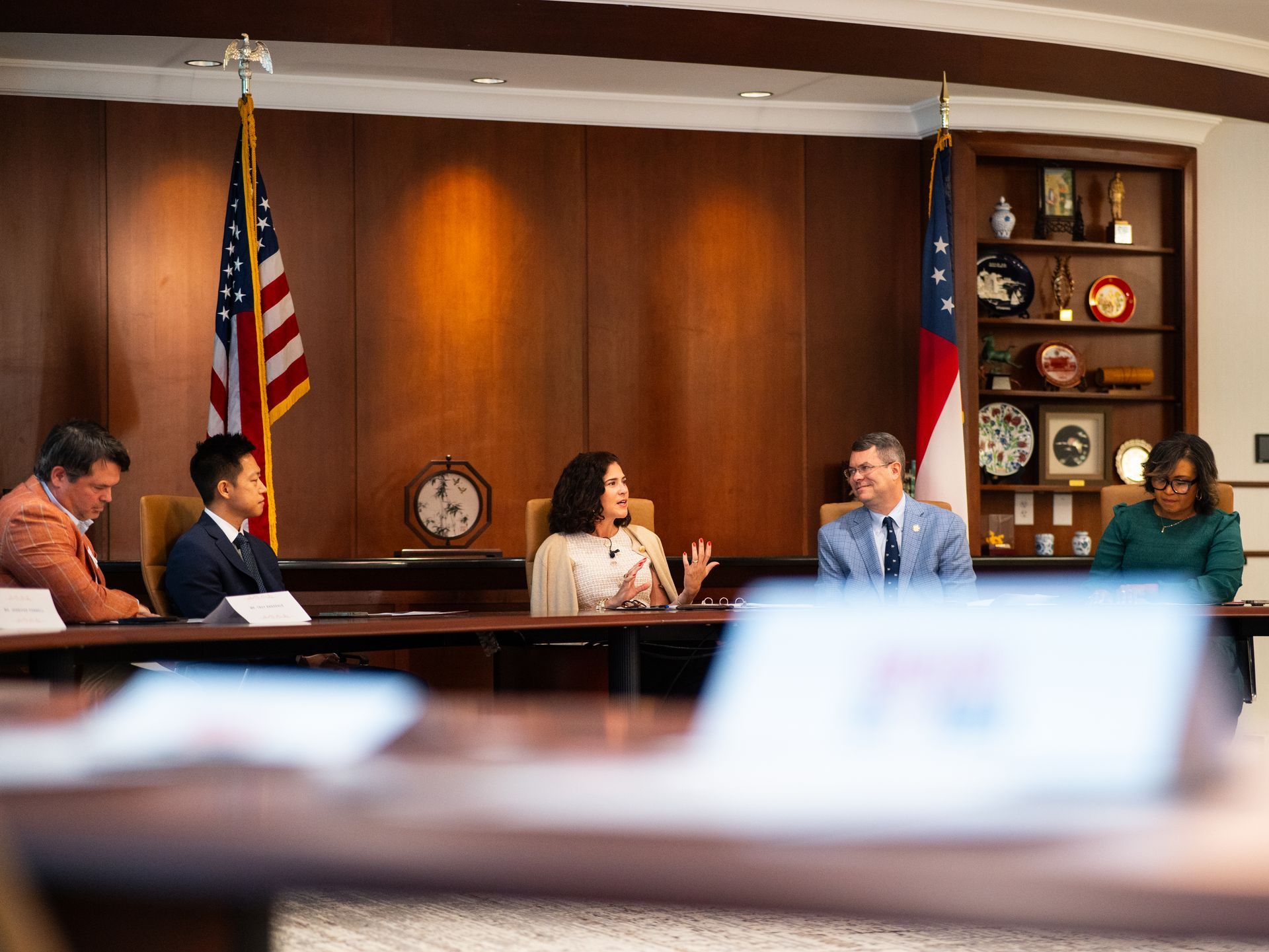
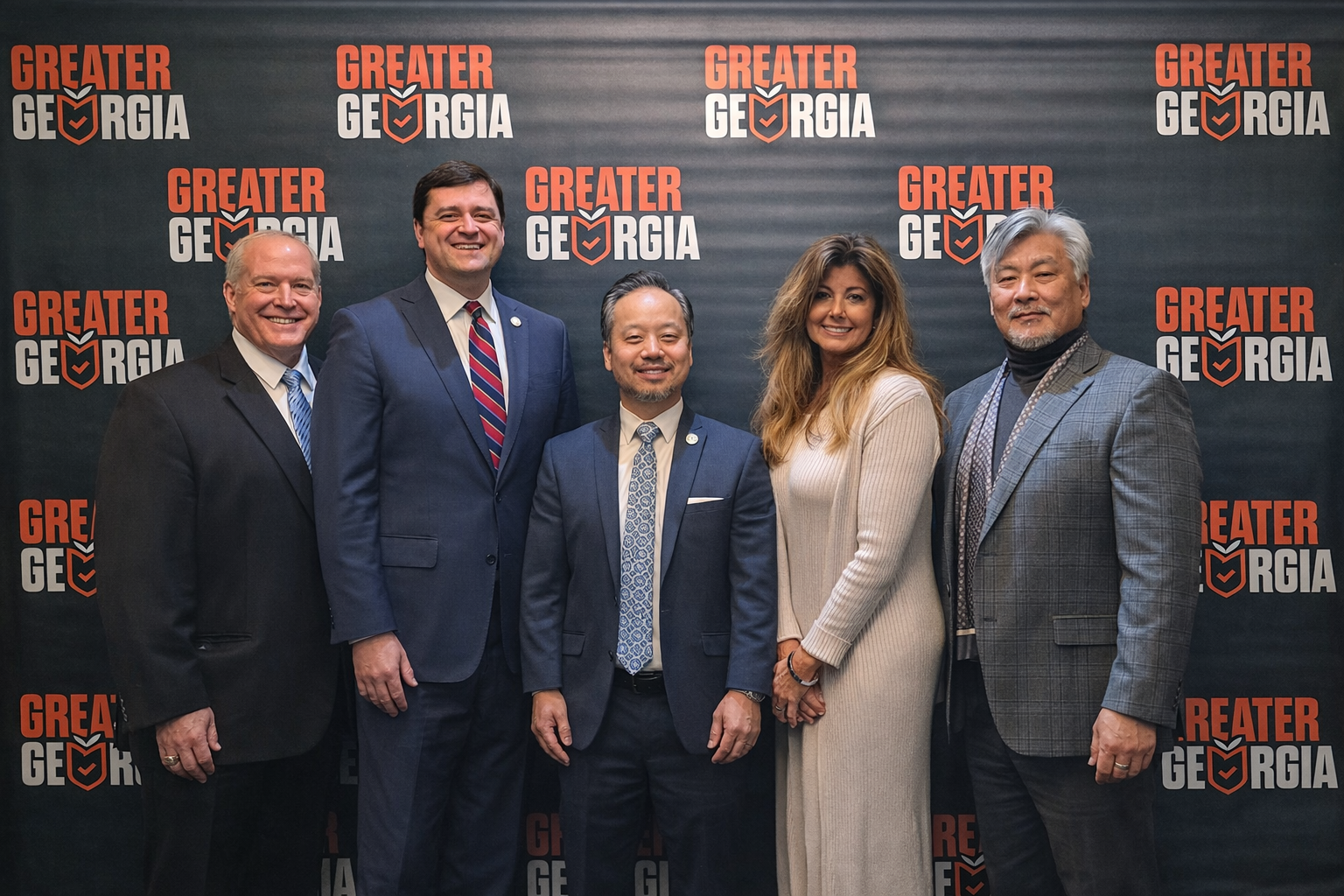
 Atlanta, GA — Greater Georgia concluded its Statewide Education Tour with a final stop hosted by the Metro Atlanta Chamber , convening business leaders, elected officials, and community stakeholders for a forward-looking discussion on Georgia’s priorities heading into the 2026 legislative session. Jon Burns , Speaker of the Georgia House of Representatives, offered a preview of key issues expected to shape the upcoming session. The discussion focused on policies central to Georgia’s long-term success, including property tax reform, access to mental health services, improving literacy outcomes, and ensuring students are prepared to enter the workforce. The Statewide Education Tour brought substantive policy conversations directly to communities across Georgia, reinforcing Greater Georgia’s commitment to informed dialogue and broad civic engagement. More than 250 business owners, community leaders, and local officials participated in tour stops across seven Georgia counties. Looking ahead to 2026, Greater Georgia will focus on training local leaders and activists and equipping them with the tools needed to host engaging, policy-oriented conversations in their own communities to strengthen civic leadership and engagement across the state. ###
October 17, 2025
Your Local Vote Matters:  Evaluating Candidates for Local Office
By Carmen Bergman August 11, 2025
BUSINESS LEADERS JOIN LABOR COMMISSIONER BARBARA RIVERA HOLMES AND GREATER GEORGIA TO TACKLE WORKFORCE READINESS
July 15, 2025
ATLANTA, GA— Greater Georgia today released a statement in support of Georgia’s ongoing voter roll cleanup, calling the move a necessary and long overdue step to protect election integrity and restore confidence in the state’s electoral process. The Secretary of State’s office last week began the process of removing more than 500,000 outdated voter registrations, including those who have moved, passed away, or not voted in nearly a decade, as part of one of the largest list maintenance efforts in Georgia history. “This voter roll cleanup is not only common sense, it’s long overdue after fear-mongering lawsuits from leftist groups halted the process,” said Terry Fye of Greater Georgia. “Election officials, and especially the Secretary of State’s office, are legally required to keep our rolls accurate and failing to do so undermines trust in our elections and opens the door to potential fraud.” Georgia law requires regular voter roll maintenance to ensure only eligible voters remain on the rolls. The current process includes multiple attempts to contact inactive voters before any cancellation is finalized, offering ample time to update their information and maintain active status. Since its founding, Greater Georgia has worked to strengthen trust in elections by advocating for secure, transparent, and accountable voting practices. The organization has registered more than 65,000 new voters, expanded civic engagement in every corner of the state, and continues to push for meaningful reforms that protect the vote of every legal Georgian. ### Greater Georgia, founded by former U.S. Senator Kelly Loeffler in 2021, is working to register, engage, educate, and mobilize voters in communities across the Peach State. Our year-round work is focused on growing our movement by registering voters who may not be captured by Georgia’s “Motor Voter” program, mobilizing diverse and underrepresented communities, promoting issue advocacy, and fighting to restore trust and integrity in our elections.
April 18, 2025
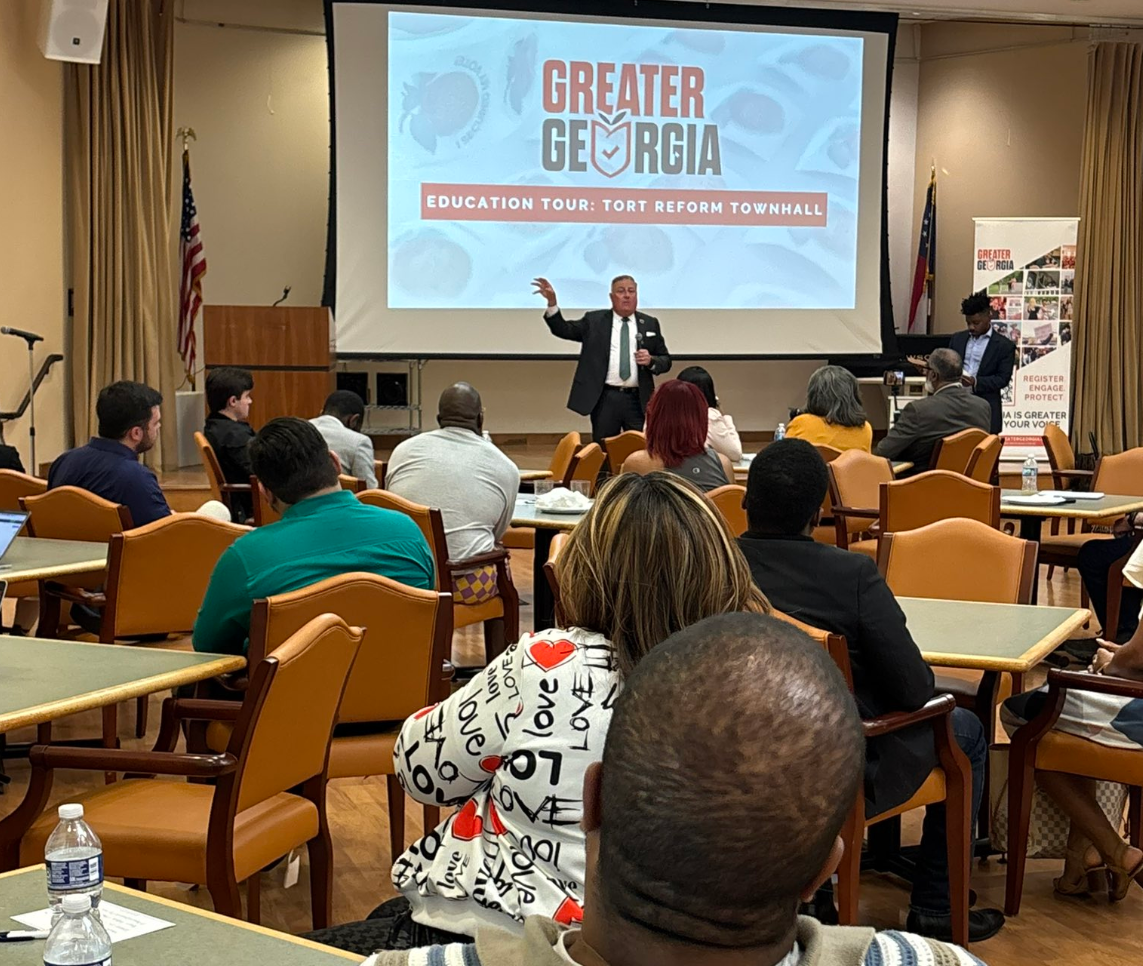
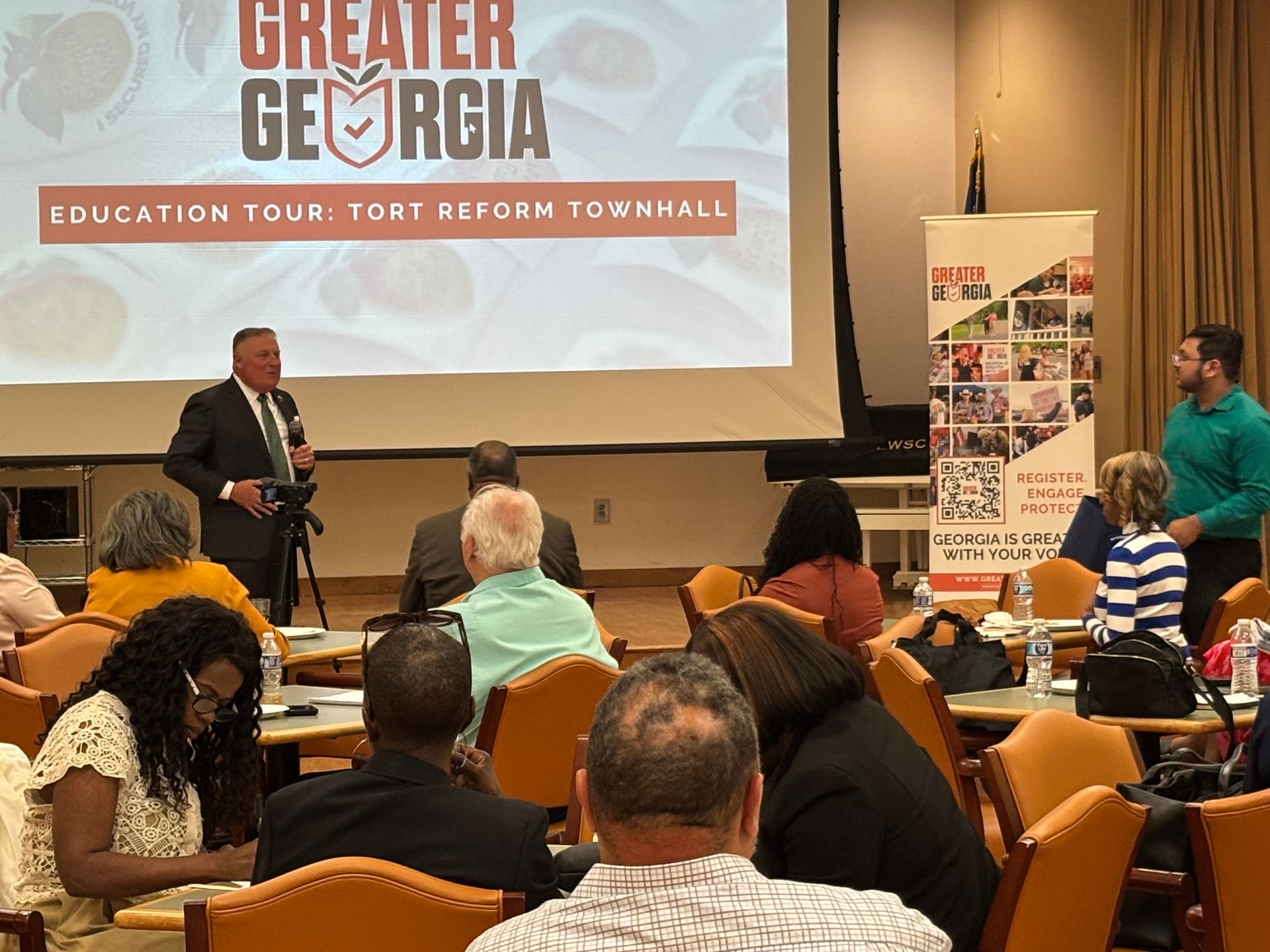
ATLANTA, GA — Today, Greater Georgia Action, Inc. announced a statewide education tour to inform Georgians about consequential legislation passed during the 2025 legislative session, with a heavy focus on Governor Brian Kemp’s civil judicial reform package. Engaging speakers and innovative event formats will allow Georgians to learn about the impact of these laws and ask questions in an approachable environment. Each unique event, ranging from small business roundtables to town halls, will feature key civic leaders, elected officials, and topic experts. Additional information will be made available closer to the event. Greater Georgia is excited to visit: April 16, 2025 - Dekalb County (Stonecrest, GA) featuring Insurance Commissioner John King Bibb County (Macon, GA) Fulton County (Alpharetta, GA) Chatham County (Savannah, GA) Whitfield County (Dalton, GA) Gwinnett County (TBD) Doughtery County (Albany, GA) Athens Clarke County (Athens, GA) Lowndes County (Valdosta, GA) “Educating diverse and disengaged communities is a key mission of Greater Georgia, so we’re taking our message on the road to reach voters where they are,” said Terry Fye, Director of Outreach for Greater Georgia. “Georgia took an immense step toward balanced court rooms and competitive insurance markets, and these events will help Georgians understand the full benefits of tort reform and provide real- time feedback to their elected officials.” “Session is out, and now our work begins in earnest to educate voters on the legislation passed that will impact them and their families. This tour will empower voters and provide them with the resources they need to make informed decisions next November.” For additional information about Greater Georgia and to receive updates about the education tour, please visit our website, https://www.greatergeorgia.com/.
Show More